Introduction
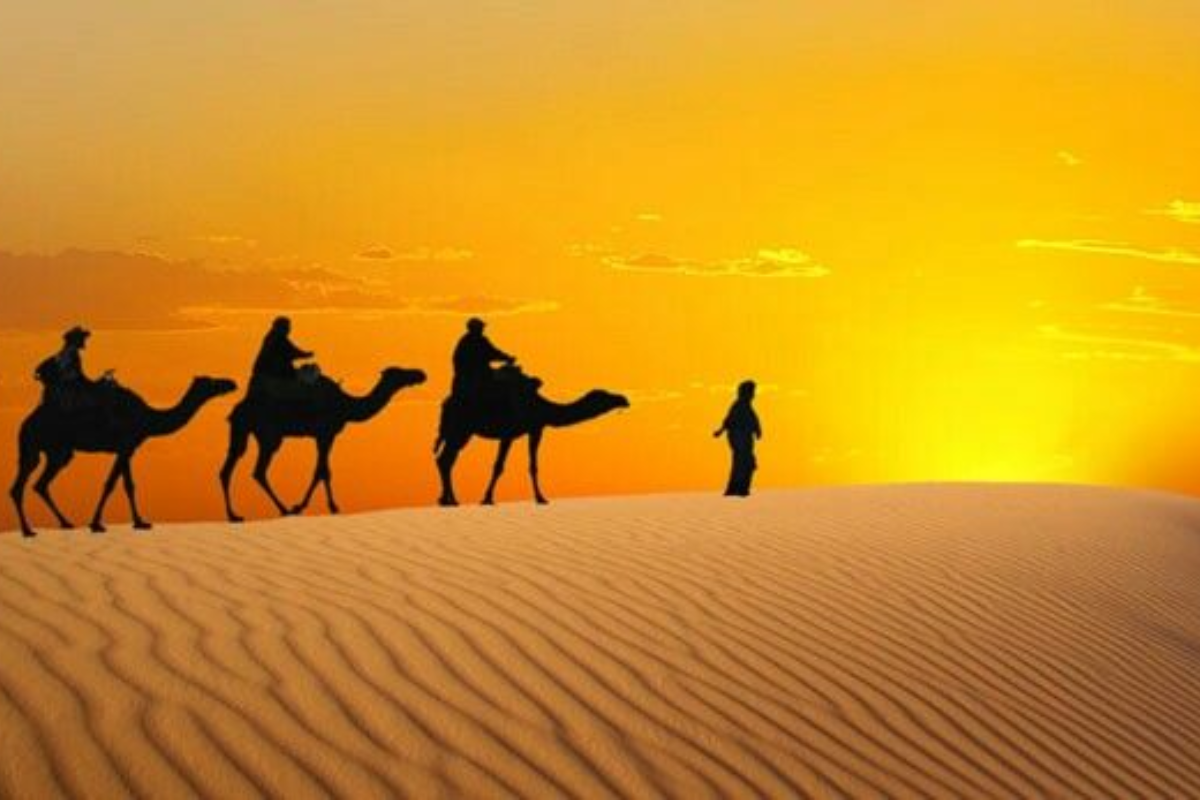
Imagine watching the sun drop behind a wave of sand so wide it feels like the edge of the world, then falling asleep under a sky crowded with stars. That’s the spell the Sahara has over travelers, and it’s exactly why a well-planned Morocco Desert Tour ends up being the highlight of so many Trips In Morocco. Even though the drive is long, the dunes reward you in a way photos simply cannot capture.
Shared or private: which Sahara style fits you best?
There are several ways to experience the Sahara, and the “right” option depends on your comfort level, budget, and how much control you want over the pace. You can rent a car and design everything yourself, which can be rewarding if you enjoy long road days and feel confident driving winding mountain routes. You can also hire a private driver or book Morocco private tours, which removes the stress of navigation, timing, and local logistics.
If you want a comfort-forward experience, private travel can feel like a true Luxury Trip To Morocco, because you choose your stops, your breaks, and your rhythm. In addition, if you want the itinerary built around your interests—more photography, fewer shopping stops, longer dunes time—then Custom Tours Morocco and Morocco Custom Tours are the cleanest way to get exactly what you want without compromises.
Why a shared Sahara tour can be the smartest choice
Even though private travel is comfortable, shared tours can be a perfect match for budget travelers and solo travelers who want the Sahara without planning fatigue. The biggest advantage is that everything is handled: transportation, timing, major stops, and the desert camp coordination. When you’re busy, tired, or simply not in the mood to plan every detail, shared Desert Trips Morocco make the experience feel easy.
Shared tours also have a social upside that people underestimate. Long drives become more fun when you have others to chat with, and the desert night tends to bring people together quickly because the experience is so memorable. If you like the idea of meeting new friends while still getting a structured plan, shared travel can be one of the best versions of a morocco desert tour.
Merzouga vs Zagora: how to choose the “real dunes” experience
If you are deciding between Merzouga and Zagora, the main question is simple: do you want towering sand dunes, or do you want a shorter “desert-edge” experience? Many travelers come to Morocco dreaming of the classic dunes, and that experience is most strongly associated with Merzouga and the Dunes of Erg Chebbi. That’s why three-day itineraries so often aim for Merzouga: it’s far, but it delivers the dune scenery people imagine when they say “Sahara.”
Zagora trips can still be enjoyable, but they are often misunderstood. Some tours bring travelers to rocky desert landscapes near Zagora town, while the deeper dune-feel desert experience is closer to M’hamid. If your goal is that big-dunes, climb-a-ridge-for-sunset moment, prioritize Merzouga and Erg Chebbi. If your schedule is tight and you just want a taste, Zagora can work—but it’s important to set expectations so you don’t arrive disappointed.
My 3-day Sahara experience: the story (Marrakech to Merzouga and back)
I’ve done shared Sahara trips more than once, but this specific three-day experience happened in November 2021 when an old friend visited from Canada and had one dream request: she wanted to see the Sahara. Because the visit was short, a shared tour was the easiest way to make it happen without turning the planning into a second job. It’s also a great reminder that you don’t need a perfect itinerary to have a perfect memory—what you need is the right route and the right pacing.
My itinerary began from Marrakech, which is one of the most common desert gateways in the country. If you are planning from this hub, it makes sense to start with Marrakech Tours or directly with Marrakech Desert Tours. Marrakech is built for departures: drivers, routes, and timing are standardized, so it’s easy to find a trip that fits your schedule.
Day 1: Marrakech to Aït Ben Haddou, rose valleys, and Tinghir
Our departure was early in the morning, and our driver picked up the group in a comfortable minibus, explained the day’s flow, and got us moving quickly. Even if you’re tempted to sleep, the drive through the High Atlas makes that hard because the scenery keeps pulling your attention. We crossed the Tizi n’Tichka pass, and while the mountain roads can be challenging if you get motion sickness, careful driving and frequent photo stops make a big difference.
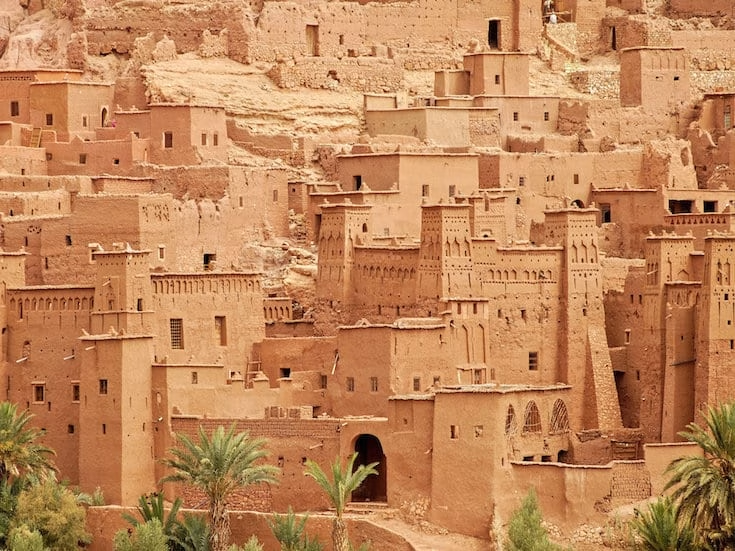
By midday we reached Aït Ben Haddou, a fortified ksar that feels like stepping into a different century. It’s one of Morocco’s most iconic landmarks for a reason: earthen clay architecture, dramatic angles, and a village layout that seems to blend into the landscape. Even after multiple visits, it still surprises you with how beautiful it is. This stop also helps the trip feel balanced—your Sahara journey becomes a mix of culture and landscapes, not just “driving to the dunes.”
After lunch, the landscape shifted again. Valleys opened up, small villages appeared and disappeared, and we passed through areas known for rose products and local distillation. These quick stops might feel small in the moment, but they add texture to the journey and keep the day from feeling like one long transfer. By late afternoon we reached Tinghir and checked into a hotel that was much nicer than many travelers expect on a shared tour.
Dinner that night was hearty, and the mood was relaxed. After a full day on the road, comfort matters, and this is one reason shared desert routes can be a great value: you get consistent lodging and support without having to negotiate everything yourself. If you prefer upgraded lodging and a more private atmosphere, this is also where Luxury Trip to Morocco planning can change the feel of the trip dramatically.
Day 2: Todgha Gorges, desert gateways, and Merzouga dunes
Day two started with scenic highlights, including Todgha Gorges, where canyon walls rise dramatically and the landscape feels almost unreal. A local guide walked us through the area and explained some of the natural and cultural details. This kind of local layer is what turns a “road trip” into a story—because you’re not just passing landscapes, you’re understanding them a little as you move.
After lunch we continued through desert-side towns and gateways like Erfoud and Rissani. You can feel the shift in the air and the horizon as you approach Merzouga. This is where the trip changes emotionally: the dunes begin to appear in the distance, and suddenly you’re not imagining the Sahara anymore—you’re arriving. If you chose this route for the dunes, this is the payoff moment for Merzouga desert tours.
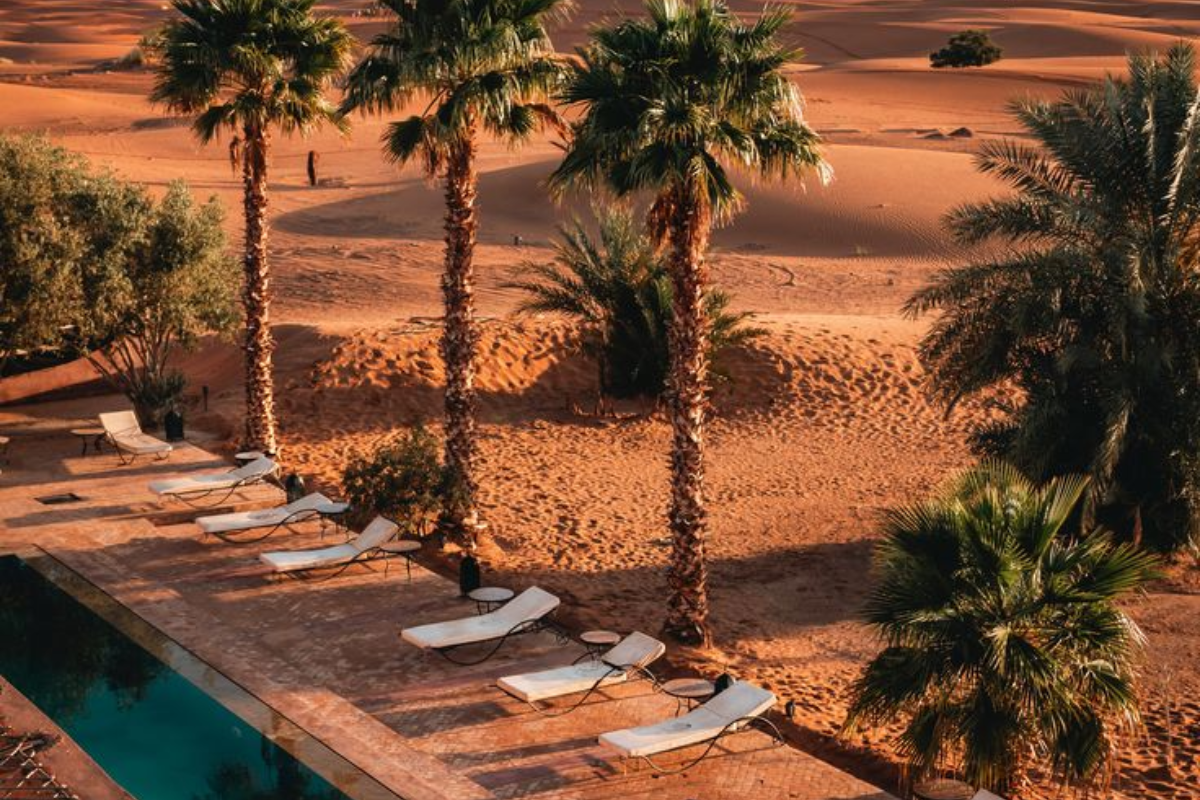
At the guesthouse near the dunes, we were welcomed with tea and met our desert guides. They showed travelers how to tie scarves and turbans in the desert style, which is both practical and part of the fun. Then we started the transition into the dunes on camelback. That shift—from road travel to desert travel—is one of the most memorable parts of the whole journey, because your pace slows down and the world gets quieter.
Camel trekking and sunset on the Dunes of Erg Chebbi
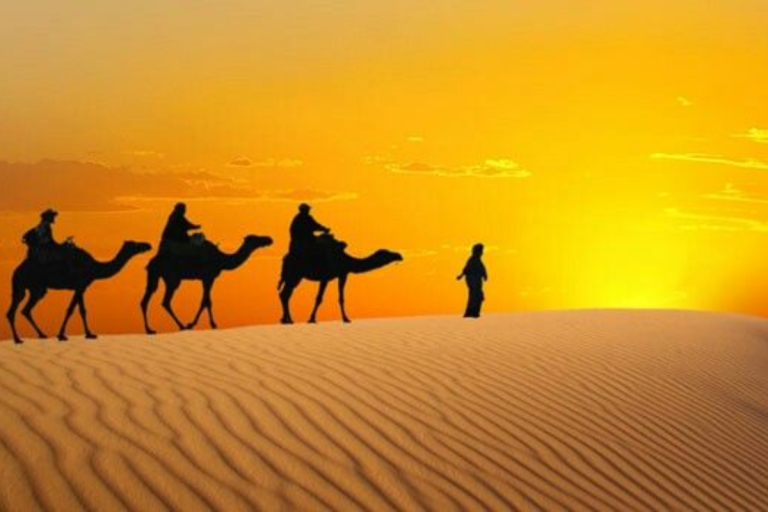
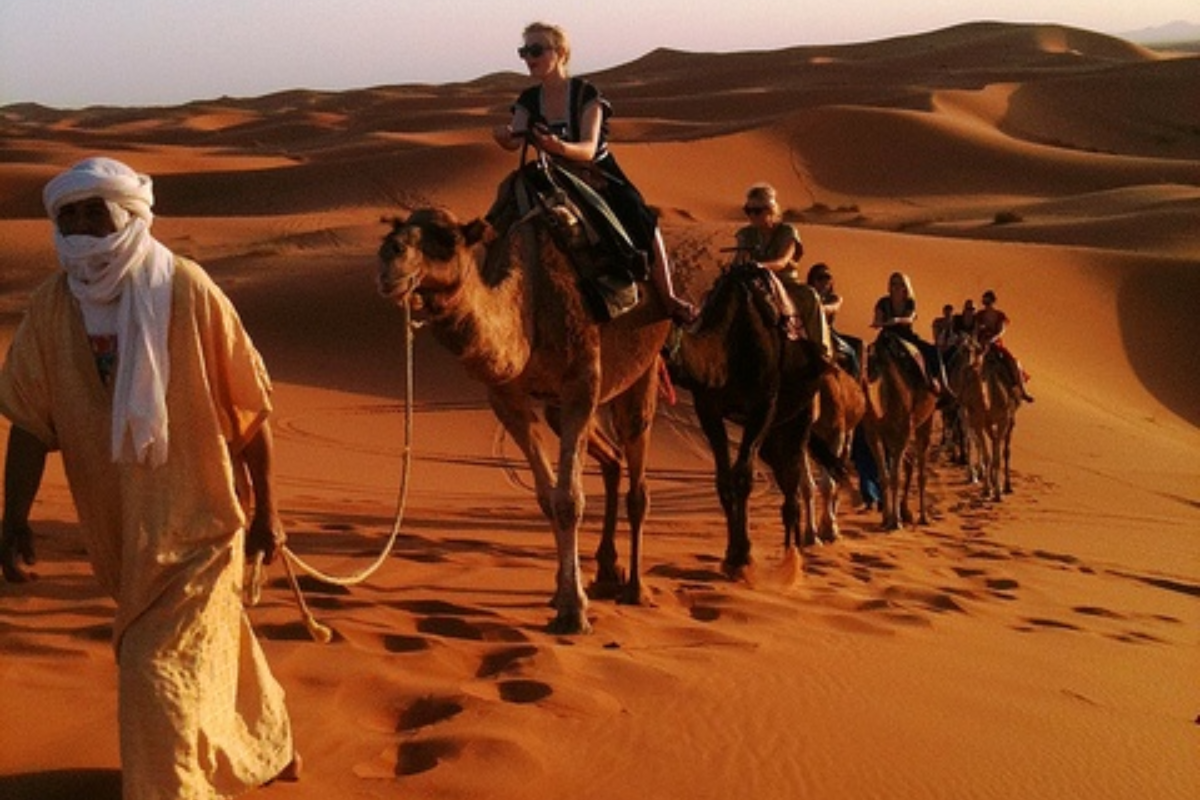
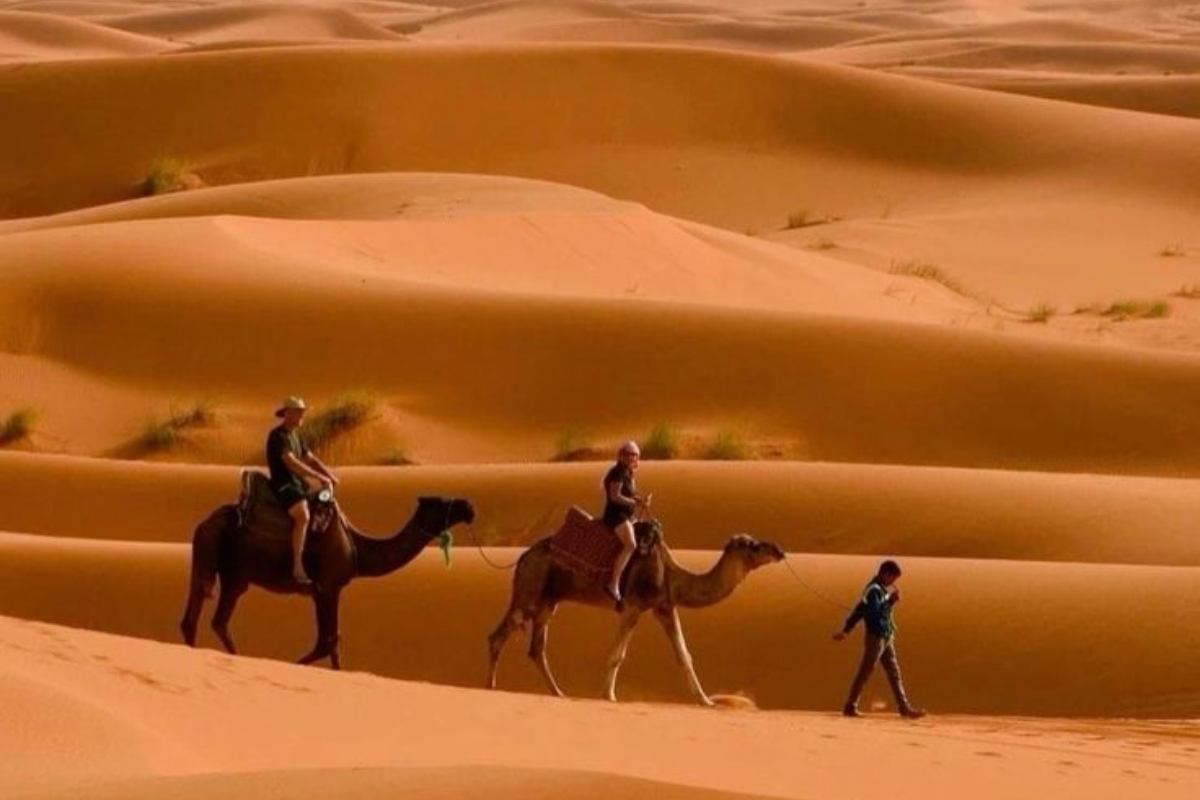
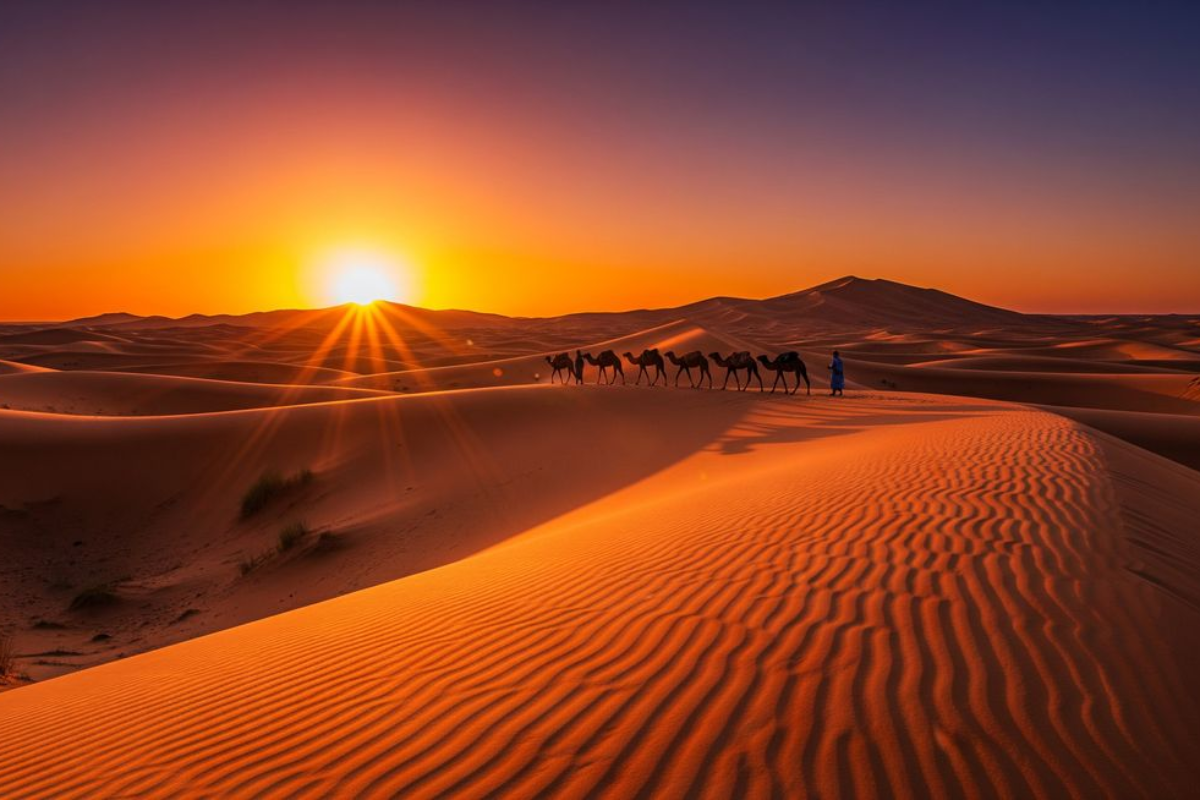
Riding a camel is an experience that feels awkward for about two minutes and then becomes surprisingly calming. The movement is steady and rhythmic, and the silence around you grows with every step into the sand. This is why camel trekking in Merzouga is so iconic: it makes the desert feel earned rather than delivered. If you want the shorter version, a Camel Ride in Merzouga still captures the essence, especially when timed for sunset.
As we reached the dunes, we had time to walk, climb, and take in the shapes that look almost sharp—like the wind sculpted the sand with a blade. Then the real moment arrived: sunset from a high dune, looking out at what felt like endless dunes in every direction. The Dunes of Erg Chebbi are famous for a reason. The scale is hard to process until you see it yourself.
Night in the desert camp: simple comforts and big atmosphere
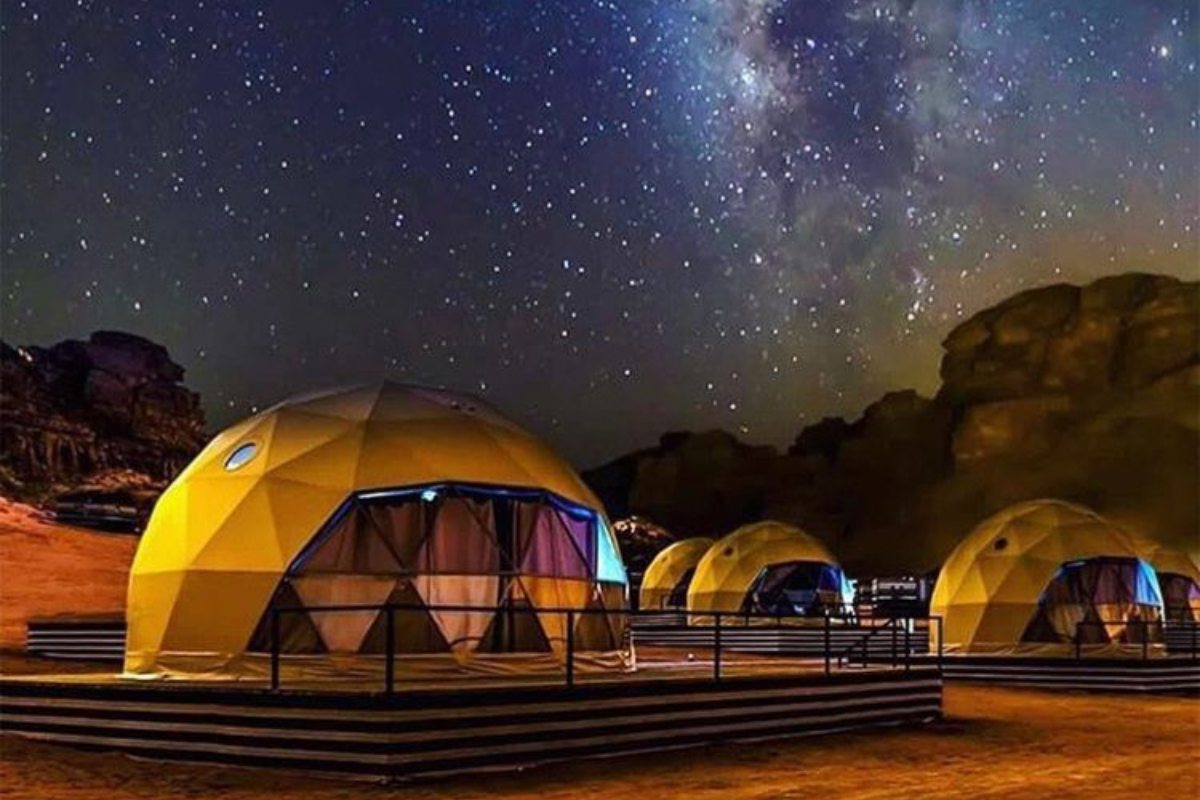
After sunset, we returned to camp and settled in for the night. The camp had basic washing facilities and toilets, and yes, there can be a bit of waiting—but once you’re covered in sand and smiling from the sunset, it honestly stops mattering. The evening was classic Sahara camp energy: tagines, tea, drum music, and a sky so clear it feels unreal if you come from a city.
Even in November, the tents were comfortable because we had plenty of blankets. Desert nights can cool down quickly, so this is where packing and planning matter. A well-run camp prepares for this, and a well-planned route gives you enough rest to enjoy it. If you want more privacy, more space, and higher comfort, you can build your trip as a private plan through Morocco private tours or ask for higher-end camp styles as part of Morocco Custom Tours.
Day 3: sunrise, return to the road, and the long drive back to Marrakech
We woke up early for sunrise because it’s the one moment you’ll regret missing if you sleep in. The dunes look softer, the light feels gentle, and the desert is quiet in a different way than it is at night. After sunrise, we rode back toward civilization and had breakfast in the main guesthouse. If you move quickly, you can sometimes fit in a quick shower before the drive, which feels amazing after a night of sand and wind.
The third day is the hardest physically because it’s a long road day back to Marrakech with multiple stops along the way. However, it’s also emotionally satisfying, because your head is full of the desert. You’re tired, yes, but the exhaustion is the “good kind”—the kind that follows a once-in-a-lifetime experience. That’s the strange magic of a Sahara trip: it drains you a little and fills you a lot.
Optional add-ons: when quads make sense (and when they don’t)
Some travelers want to add adrenaline to the dunes, which is why options like quads Merzouga show up in planning conversations. Quads can be fun if you love speed and want a more active desert experience. The key is to add them intentionally rather than automatically, because the desert’s best feature is often stillness.
If you’re torn, a simple strategy works well: prioritize sunset, a dune walk, stargazing, and sunrise first. Then decide if you still want extra activities. Most people find that the dunes themselves are enough when you give them your full attention.
How to pick the best starting city for your Sahara route
This story begins from Marrakech, but the Sahara can be planned from multiple city gateways depending on how your Morocco trip is structured. If you are starting from the north, Fes Tours and Fes Desert Tours can be a great match because they let you build a culture-first itinerary and then move into the dunes later.
If you land internationally and want smoother logistics, Casablanca Tours and Morocco Tours From Casablanca can help connect airport arrivals with desert planning efficiently. If you want a north-to-south story, Tangier Tours and Tours from Tangier can build a broader journey across multiple regions. If your priority is maximizing dunes time while reducing long transfers, Errachidia can be a smart gateway depending on your route.
Final thoughts: would I do this Sahara trip again?
Yes, without hesitation. A three-day Sahara route includes a lot of driving, and it’s important to be honest about that. But if you treat the drive as part of the story—the mountains, the gorges, the towns, the transitions—then the Sahara becomes more than a single destination. It becomes the centerpiece of a journey that explains Morocco’s diversity in a way you can’t understand from cities alone.
If you want the desert done smoothly, the best choice is to plan through a team that understands pacing, camp quality, and route logic. That’s why travelers look for providers like Morocco Desert Friends when organizing Morocco Desert Tours and Moroccan Desert Trips that feel safe, memorable, and worth every kilometer. Whether you want shared travel value or a comfort-first Luxury Trip To Morocco approach with Custom Tours Morocco, the Sahara is waiting, and it truly lives up to the dream.