10 Day Morocco Itinerary: Marrakech, Sahara Desert & Fes
Planning a 10 day Morocco itinerary is a great way to experience several of the country’s most fascinating destinations without turning your holiday into a race from one city to another. With the right route, you can explore Marrakech, cross the High Atlas Mountains, spend a night beneath the stars in the Sahara Desert, and finish your journey in the historic city of Fes.
This 10 day Morocco itinerary follows a practical route from Marrakech to the Sahara and then north to Fes, with memorable stops in Ait Benhaddou, Ouarzazate, the Dades Valley, Todra Gorge, Merzouga, and Midelt. More importantly, the itinerary leaves enough time to experience each destination rather than simply checking places off a list. For travelers looking for authentic Morocco Desert Trips, this route combines cultural highlights, mountain scenery, and an unforgettable Sahara experience.
Whether you are visiting Morocco for the first time, planning a 10 day Morocco trip, or looking for a realistic Morocco itinerary for 10 days, this guide explains how to organize the journey. You will find a day-by-day route, transportation options, accommodation advice, packing tips, seasonal information, and ideas for adapting the itinerary to your travel style. If you are considering Morocco Desert Tours, this itinerary can also serve as a practical starting point for planning a private or customized journey.
Quick Overview of This 10 Day Morocco Itinerary
Before getting into the detailed itinerary, it helps to understand how the route fits together. The journey starts in Marrakech, crosses the High Atlas Mountains, continues through southern Morocco toward the Sahara, and then heads north through the Middle Atlas to Fes.
-
Trip length: 10 days and 9 nights
-
Main route: Marrakech → Ait Benhaddou → Dades Valley → Merzouga → Midelt → Fes
-
Main cities: Marrakech and Fes
-
Main desert destination: Merzouga and Erg Chebbi
-
Main desert experience: Dunes of Erg Chebbi, camel trekking, sunset, sunrise, and desert camping
-
Mountain ranges: High Atlas and Middle Atlas
-
Recommended seasons: Spring and autumn are generally comfortable for this route
-
Sahara experience: Camel Ride in Merzouga, desert camp, sunset, sunrise, and stargazing
-
Ideal for: First-time visitors, couples, families, and private-tour travelers
-
Transportation: Private car with driver, rental car, or a combination of trains and tours
-
Currency: Moroccan dirham (MAD)
Travel times, accommodation prices, entrance fees, and transportation costs can change depending on the season and the provider. Therefore, treat the figures in this guide as planning estimates and confirm current prices before making reservations.
Why Choose a 10 Day Morocco Itinerary?
Morocco may look relatively compact on a map, but the distances between its major destinations can be significant. As a result, trying to visit too many places during a short holiday can leave you spending more time on the road than actually enjoying Morocco.
A well-planned 10 day Morocco itinerary solves that problem by connecting destinations that naturally fit together. Instead of constantly returning to the same starting point, this route moves in one direction from Marrakech through the desert and eventually to Fes. For travelers interested in Marrakech Tours and Fes Tours, this creates a convenient journey that connects two of Morocco’s best-known cultural cities.
For first-time visitors, this is particularly useful because the trip combines several very different sides of Morocco. You begin with the colorful medina and historic architecture of Marrakech, then experience mountain landscapes, ancient kasbahs, desert valleys, golden dunes, and finally the medieval streets of Fes.
Moreover, each part of the journey offers something different. Marrakech provides the big-city introduction to Moroccan culture, while the Atlas Mountains reveal a quieter rural landscape, and the Sahara adds an entirely different atmosphere before Fes brings the trip back into an urban and historical setting.
Another advantage is that the itinerary does not require you to see every famous Moroccan destination. Although places such as Casablanca, Chefchaouen, Essaouira, Rabat, and Tangier are worth visiting, adding all of them to a 10-day trip would make the schedule considerably more demanding.
Instead, this route concentrates on a smaller number of destinations and gives each one a clear purpose. Therefore, if your priorities are Marrakech, the Sahara Desert, and Fes, this is a practical route to consider. It is also a strong option for travelers comparing Morocco Desert Tours, Morocco private tours, and independent travel.
10 Day Morocco Itinerary at a Glance
Here is the complete route before we explore each day in detail.
Days 1–3: Marrakech
Spend three nights exploring the medina, Jemaa el-Fnaa, Jardin Majorelle, Bahia Palace, the souks, and historic neighborhoods. This also gives you time to recover from your journey before beginning the longer drive toward the Sahara.
Day 4: Marrakech to Dades Valley
Cross the High Atlas Mountains and visit Ait Benhaddou before continuing through Ouarzazate and toward the Dades Valley. This is one of the most scenic driving days of the trip.
Day 5: Dades Valley to Merzouga
Visit Todra Gorge, travel through southeastern Morocco, and arrive in Merzouga. Finish the day with a Camel Ride in Merzouga into the Dunes of Erg Chebbi and an overnight stay at a Sahara desert camp.
Day 6: Merzouga to Midelt
Watch the Sahara sunrise, enjoy optional activities around Merzouga, and then travel north through the Ziz Valley and Middle Atlas region toward Midelt. An overnight stay here breaks up the long journey to Fes.
Days 7–9: Fes
Continue from Midelt to Fes and spend several days exploring Fes el-Bali, Fes el-Jdid, the souks, historic buildings, artisan workshops, and viewpoints. Keeping multiple nights in Fes allows you to explore without rushing.
Day 10: Departure
Enjoy a relaxed final morning before departing from Fes or continuing toward Casablanca if your international flight requires it. This flexible ending makes the itinerary easier to adapt to different flight schedules.
Days 1–3: Discover Marrakech
Your 10 day Morocco itinerary begins in Marrakech, a city famous for its historic medina, colorful souks, traditional architecture, gardens, and lively public spaces. Because Marrakech is also a popular starting point for Marrakech Desert Tours, it works particularly well as the first stop on this route.
Rather than trying to see everything immediately, use the first three days to become familiar with the city. Consequently, you can enjoy Marrakech at a comfortable pace before beginning the longer journey toward the desert.
Day 1: Arrival in Marrakech
On your first day, keep the schedule relatively light, especially if you have just completed a long international flight. After checking into your riad or hotel, take some time to rest, unpack, and get comfortable with the surrounding neighborhood.
Later in the afternoon, start exploring the medina on foot. The narrow streets can initially feel confusing, but that is part of the experience, and you will gradually become more comfortable navigating the city.
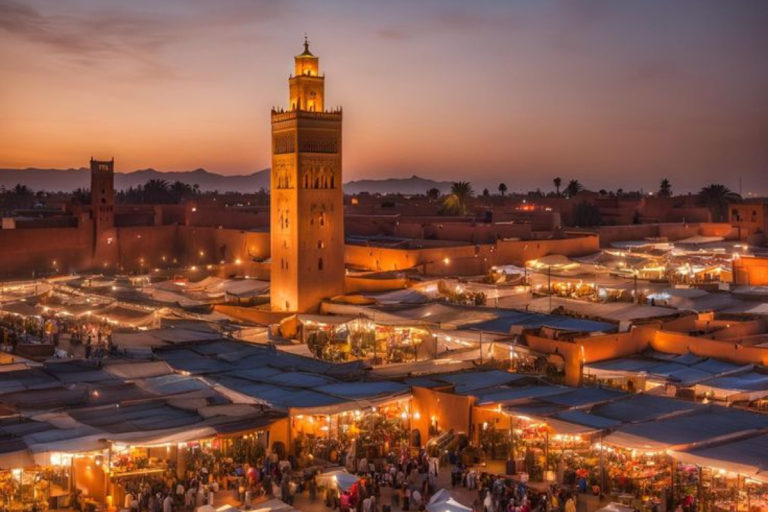
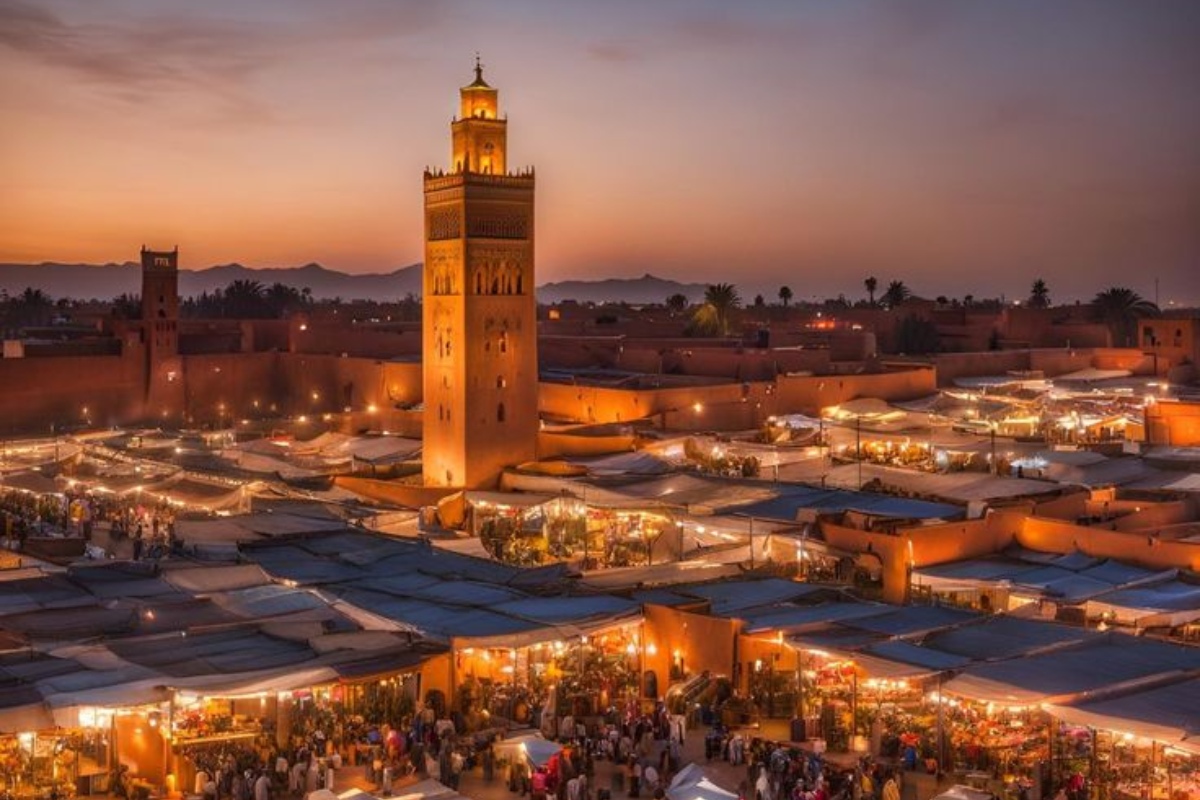
As evening approaches, make your way toward Jemaa el-Fnaa. The famous square becomes particularly lively around sunset, with food stalls, musicians, performers, vendors, and locals creating a unique atmosphere.
Afterward, you can have your first Moroccan dinner in or around the medina. Traditional dishes such as tagine, couscous, harira, and Moroccan salads are easy choices for beginning your trip.
Day 2: Jardin Majorelle, Bahia Palace and the Souks
Start your second day by visiting Jardin Majorelle, one of Marrakech’s most recognizable attractions. Going earlier in the day can help you enjoy the gardens before the busiest periods.
The garden is known for its distinctive blue architecture, plants, pathways, and peaceful atmosphere. After your visit, continue toward the historic center and explore another important Marrakech landmark, Bahia Palace.
Bahia Palace provides an opportunity to see Moroccan architectural details such as zellige tilework, carved wood, decorated ceilings, courtyards, and traditional geometric designs. Take your time because many of the smaller details are easy to miss when you move through the palace too quickly.
Afterward, spend the afternoon exploring the souks. You will find everything from spices and textiles to leather products, lamps, pottery, clothing, and handmade crafts.
However, do not feel pressured to purchase something immediately. Instead, walk around first, compare prices, and become familiar with the different areas of the market.
For travelers planning additional Marrakech Tours, the third day can also be used for an excursion outside the city.
Day 3: Historic Marrakech and Free Time
Your third day gives you more flexibility. You can visit the Saadian Tombs, explore the Kasbah area, discover additional souks, or simply slow down after two busy days.
If you enjoy cultural experiences, you could also spend part of the day in a traditional hammam. Alternatively, use the afternoon to relax at your riad, enjoy a rooftop terrace, or try more Moroccan food.
Another possibility is taking a short excursion outside Marrakech. The Agafay Desert is relatively close to the city and offers rocky desert landscapes, sunset experiences, camel rides, and other activities. It can therefore be an interesting addition to a selection of Marrakech Desert Tours.
However, Agafay should not be confused with the Sahara. It is a rocky desert environment rather than the large sand dunes associated with Erg Chebbi, so it provides a different experience.
By the end of Day 3, you should have experienced the major highlights of Marrakech while still having enough energy for the next stage. Therefore, make sure your transportation for the following morning is confirmed before going to bed.
Day 4: Marrakech to Dades Valley via Ait Benhaddou
Day 4 marks the transition from Marrakech into southern Morocco. It is also one of the most scenic days of this 10 day Morocco itinerary because the landscape changes dramatically throughout the journey.
Leave Marrakech in the morning and head toward the High Atlas Mountains. The road climbs toward the Tizi n’Tichka pass, where you can stop at viewpoints and mountain villages along the way.
Travel conditions can change depending on traffic, weather, roadwork, and the season. Therefore, it is better to allow some flexibility instead of planning every stop down to the minute.
After crossing the mountains, continue toward Ait Benhaddou. This historic fortified settlement, or ksar, is one of the most recognizable architectural sites in southern Morocco.
Walking through the narrow passages between the earthen buildings provides a completely different experience from the busy streets of Marrakech. The location has also appeared in several film and television productions, which has helped make it internationally famous.
After exploring Ait Benhaddou, continue toward Ouarzazate. The city is closely associated with Morocco’s film industry and is often used as a gateway between the High Atlas and the desert regions.
From Ouarzazate, continue east toward the Dades Valley. Along the way, you will see the landscape gradually change from mountain terrain to valleys, cliffs, agricultural areas, and dry plateaus.
The final destination for the day is the Dades Valley, where you can spend the night in a guesthouse, hotel, or traditional kasbah. Because this is one of the longer travel days, a comfortable evening and good night’s sleep are important.
Day 5: Dades Valley to Merzouga and the Sahara Desert
Day 5 takes you deeper into southeastern Morocco and eventually to the highlight of the journey for many travelers: the Sahara Desert. Although the drive is long, the changing scenery provides plenty of reasons to stop along the way.
After breakfast, continue toward Todra Gorge, one of the most dramatic landscapes in the region. Huge rock walls rise on both sides of the valley, creating a narrow passage that is particularly impressive when explored on foot.
Spend some time walking through the gorge before continuing east. The road then takes you through the Ziz Valley and toward Erfoud, a town known for fossils and fossil workshops.
Eventually, you will reach Merzouga, a small desert destination located beside the famous Dunes of Erg Chebbi. From here, the landscape becomes increasingly dominated by sand and open desert.
For travelers researching Merzouga desert tours, this is the point where the journey changes from a road trip into a genuine desert experience.
Camel Trek into Erg Chebbi
If your itinerary includes a camel trek, you will usually transfer from your vehicle to camels near the edge of the dunes. This camel trekking in Merzouga experience gives you a slower way to explore the desert landscape.
A Camel Ride in Merzouga can often be timed around sunset. As the sun drops, the colors of the dunes can change from bright gold to orange and deeper shades.
Once you reach the camp, check into your tent and take some time to relax. Many camps provide dinner, traditional music, tea, and an evening around the campfire.
The experience can be very different from staying in a normal hotel. Instead of traffic and city noise, you have open space, darkness, and a much quieter environment.
After dinner, look up at the night sky if the weather is clear. The Sahara’s low level of artificial light can make stargazing a memorable part of the experience.
This overnight stay is one of the main reasons travelers choose Morocco Desert Tours when planning a journey from Marrakech to Fes.
Day 6: Merzouga to Midelt
Wake early on Day 6 if you want to see the Sahara sunrise. The first sunlight over the Erg Chebbi dunes creates a completely different atmosphere from the previous evening’s sunset.
After sunrise, return to your accommodation or meet your driver for the next stage. Depending on your schedule, you can also enjoy a short activity around Merzouga before leaving the desert region.
For example, you might visit Khamlia, a village known for Gnawa music. Another option is exploring Rissani, an important town in the region with a traditional market on certain days.
If you prefer adventure activities, quads Merzouga experiences and sandboarding can also be included. However, remember that adding too many activities may make an already long travel day more tiring.
After leaving Merzouga, continue through the Ziz Valley and toward Erfoud. The scenery gradually changes as you move away from the Sahara and toward the Middle Atlas.
Eventually, you will arrive in Midelt, a mountain town located between the Middle and High Atlas ranges. Midelt is especially useful for this itinerary because it breaks up the long journey between Merzouga and Fes.
Without this overnight stop, the Sahara-to-Fes journey can become a demanding travel day. By staying in Midelt, you can rest and continue toward Fes the following morning with more energy.
For travelers planning Merzouga desert tours, this additional day also shows why it is useful to build enough time into your itinerary rather than trying to rush from the Sahara directly to Fes.
Days 7–9: Explore Fes
After experiencing the Sahara, your 10 day Morocco itinerary moves into a completely different environment. Fes offers a historic urban experience, with its ancient medina, traditional crafts, markets, architecture, and centuries of cultural history.
Spending three days in and around Fes allows you to explore at a slower pace. Furthermore, it gives you time to recover after several days of long-distance travel.
For travelers interested in Fes Tours or Fes Desert Tours, Fes is also a convenient place to continue exploring Morocco after the Sahara section of your trip.
Day 7: Midelt to Fes
Leave Midelt and continue north through the Middle Atlas. The route provides views of mountain landscapes, forests, valleys, and changing vegetation.
One notable stop is Ifrane, a mountain town known for its cooler climate and architecture that differs from the traditional appearance of many Moroccan cities. It can be a refreshing contrast after the heat and dryness of the Sahara.
Continue toward Fes and arrive later in the day. After checking into your riad, keep the evening relatively relaxed.
If you are staying near Fes el-Bali, take a short walk around the surrounding streets and enjoy dinner nearby. Otherwise, simply use the evening to rest because the following day is dedicated to exploring the old medina.
Day 8: Fes el-Bali
Day 8 is your main opportunity to discover Fes el-Bali, the historic old medina of Fes. The area is famous for its narrow streets, traditional markets, artisan workshops, historic buildings, and distinctive atmosphere.
Because the medina can be difficult to navigate independently, a licensed local guide can be useful, especially if this is your first visit. A guide can also explain the history behind the places you see rather than simply pointing them out.
A natural starting point is Bab Bou Jeloud, commonly known as the Blue Gate. From there, continue into the medina and explore its network of streets.
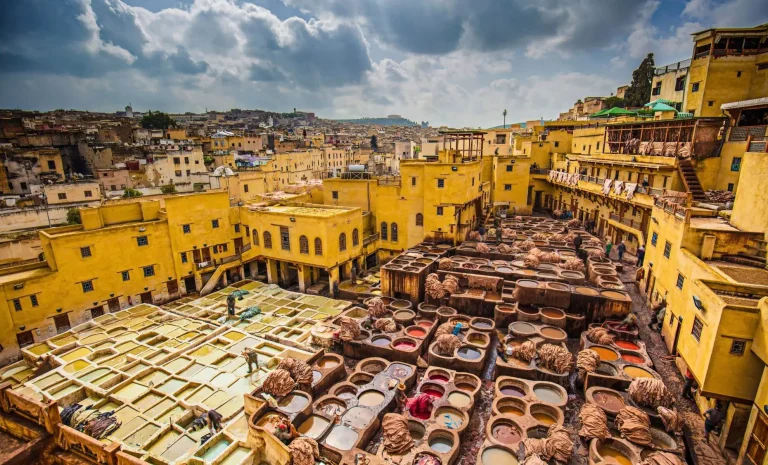
Possible stops include the Chouara Tannery, traditional souks, artisan workshops, historic madrasas, and the area around Al-Qarawiyyin.
One of the best things about Fes is that the experience is not limited to famous landmarks. You can also watch craftsmen working with leather, metal, wood, textiles, and other traditional materials.
Consequently, give yourself time to wander rather than trying to complete the medina as quickly as possible.
Day 9: Fes el-Jdid and the City Views
Use your ninth day to explore areas outside the busiest parts of Fes el-Bali. Start with Fes el-Jdid, the newer historic section of the city, and visit the impressive Royal Palace gates.
You can also explore the Mellah, the historic Jewish quarter of Fes. This part of the city adds another layer to the history and cultural development of Fes.
Later, consider visiting the Merenid Tombs or another elevated viewpoint. From the hills above the city, you can see the dense urban landscape of Fes and appreciate how large the historic medina really is.
In the evening, enjoy a traditional Moroccan meal. Fes is particularly associated with refined Fassi cuisine, so this is a good opportunity to try local dishes before the end of your trip.
Most importantly, keep the final day flexible. You have already covered a lot of ground, so there is no need to fill every hour with sightseeing.
Day 10: Departure from Fes
The final morning of your 10 day Morocco itinerary can be simple and relaxed. Enjoy breakfast at your riad, take one final walk, or buy souvenirs from the souks before leaving the city.
If your flight departs from Fes-Saïss Airport, arrange transportation in advance, particularly if you have an early departure. The airport is outside the city, so allow enough time for the transfer and airport procedures.
Another option is continuing toward Casablanca if your international flight leaves from Mohammed V International Airport. In that situation, you may choose to spend an additional night in Casablanca if your schedule allows.
This can be useful because it avoids turning your final day into a stressful race between Fes and the airport. If you have time for Casablanca, you can also consider adding one of several Casablanca Tours before your departure.

Tours from fes:
3 Days Fes to Marrakech Desert Tour
3 Days Tour from Fes to Merzouga Desert
4 Days Tour from Fes to Marrakech
4 Days Tour from Fes to Merzouga
5 Days Tour from Fes to Marrakech
7 days Tour from Fes
Transportation Options for 10 Days in Morocco
Choosing the right transportation can significantly affect your experience. Because this itinerary combines major cities with remote desert destinations, there is no single transportation option that is perfect for everyone.
Private Car With Driver
For this particular route, a private car with driver offers considerable flexibility. You can stop at mountain viewpoints, villages, kasbahs, valleys, and other places that are difficult to access by train.
Furthermore, having a driver means you do not have to concentrate on navigation during the longest driving days. You can instead enjoy the scenery, take photographs, and rest between stops.
Private transportation can be particularly convenient for families, couples, and small groups. When the cost is shared between several travelers, the price per person can also become more manageable.
For travelers searching for Morocco private tours, this type of transportation can be combined with desert camps, local guides, and customized stops.
Train Travel
Morocco’s railway network is useful for connecting several major cities. However, the Sahara itself is not directly connected by train, so you will still need road transportation for the desert section.
One possible strategy is to use trains between major cities and then join a separate desert tour. This can work well for travelers who want to combine independent city travel with an organized Sahara experience.
For example, you could spend time in Marrakech, join a desert tour, and then continue toward Fes using another transportation option.
Rental Car
Renting a car gives you more independence and allows you to create your own schedule. Nevertheless, the Marrakech-to-Sahara-to-Fes route includes mountain roads, long distances, unfamiliar traffic patterns, and desert-region driving.
Therefore, self-driving is better suited to travelers who are comfortable navigating in a foreign country and managing long road journeys.
Before choosing this option, research local driving requirements, insurance, road conditions, parking, and fuel costs. You should also allow extra time rather than assuming that map estimates will always match actual journey times.
Where to Stay During a 10 Day Morocco Trip
Accommodation can range from simple guesthouses to luxury riads and desert camps. Your choice depends on your budget, location preferences, and the type of experience you want.
Marrakech Accommodation
In Marrakech, staying inside or close to the medina provides easy access to many major attractions. Traditional riads are especially popular because they offer an architectural experience that differs from standard hotels.
However, travelers who prefer modern facilities may prefer accommodation outside the medina. Consider your transportation needs, walking ability, and preferred atmosphere before booking.
Dades Valley Accommodation
The Dades Valley has a range of guesthouses, kasbah-style hotels, and small local accommodations. Because this is primarily an overnight stop, convenience and comfort can be more important than luxury.
Look for accommodation that provides easy access to the route and, if possible, dinner and breakfast. After a long driving day, having food available at your accommodation can save time.
Merzouga Desert Camp
The Sahara is where accommodation becomes part of the experience itself. Desert camps can range from simple options to luxury tents with private bathrooms and more extensive facilities.
Therefore, do not choose a camp based solely on photographs. Check whether bathrooms are private or shared, whether dinner and breakfast are included, how luggage is transported, and how the camp is accessed.
For travelers planning Moroccan Desert Trips, the desert camp is one of the most important parts of the experience to research before booking.
Midelt Accommodation
Midelt is mainly a practical overnight stop on this route. A clean and comfortable hotel or guesthouse is usually sufficient because the main purpose of staying here is to break up the long journey to Fes.
Fes Accommodation
For Fes, consider staying inside or near the historic medina if experiencing traditional architecture is important to you. Riads can provide a memorable stay with interior courtyards, rooftop terraces, and Moroccan design.
At the same time, hotels outside the medina can be more convenient for travelers with large luggage or private vehicles. As always, choose according to your priorities rather than assuming one location is suitable for everyone.
How Much Does a 10 Day Morocco Trip Cost?
The total cost of a 10 day Morocco itinerary varies considerably. Your final budget depends on accommodation, transportation, meals, activities, travel season, and whether you travel independently or with a private tour.
Budget travelers can reduce costs by choosing simple riads, local restaurants, public transportation, and group tours. On the other hand, travelers looking for private drivers, luxury accommodation, premium desert camps, and private experiences will spend considerably more.
Travelers interested in a Luxury Trip to Morocco can customize the itinerary with higher-end riads, luxury desert camps, private transportation, and exclusive experiences. Meanwhile, travelers on a smaller budget can focus on essential activities and comfortable local accommodation.
Transportation is another major factor. A private vehicle with a driver generally costs more than public transportation, but it also provides greater flexibility on the long route between Marrakech, the Sahara, and Fes.
For an accurate budget, calculate each category separately:
-
Accommodation
-
Transportation
-
Food
-
Entrance fees
-
Desert activities
-
Guide fees
-
Shopping
-
Tips
-
Travel insurance
-
Airport transfers
This approach is more useful than relying on a single estimated price for the entire trip. In addition, always check current prices because tourism costs can change according to season and demand.
Best Time for a 10 Day Morocco Itinerary
The best time for your 10 day Morocco itinerary depends on which regions you want to visit and how comfortable you are with different temperatures. Because this route crosses mountains, cities, valleys, and desert landscapes, conditions can vary significantly.
Spring and autumn are often comfortable periods for combining Marrakech, the Atlas Mountains, the Sahara, and Fes. April and May can offer pleasant conditions in many areas, while September through November can also be attractive for a Morocco trip.
Summer can be extremely hot in the desert. During the hottest months, daytime temperatures in southeastern Morocco can become uncomfortable, particularly during the middle of the day.
Winter brings a different challenge. Marrakech and Fes can be cool, mountain roads can experience cold weather, and desert nights can become very cold.
Therefore, do not pack only for the Sahara. Your route crosses several climate zones, so layered clothing is particularly useful.
What to Pack for 10 Days in Morocco
Packing for a 10 day Morocco trip requires some preparation because your itinerary includes cities, mountains, and desert environments. The goal is to bring enough clothing for changing conditions without filling your suitcase unnecessarily.
Start with comfortable walking shoes. Marrakech and Fes involve a lot of walking, especially if you plan to explore the medinas.
Next, pack lightweight clothing for warm days and additional layers for cooler evenings. A light scarf can also be useful in the desert because it provides protection from sun and wind.
For the Sahara, consider bringing:
-
Comfortable walking shoes
-
Lightweight day clothes
-
Warm evening layers
-
Scarf
-
Sunglasses
-
Sun protection
-
Reusable water bottle
-
Power adapter
-
Small backpack
-
Headlamp
-
Camera or phone charger
-
Personal essentials
If you are traveling during cooler months, add warmer layers for the desert and mountain regions. Temperatures can change significantly between daytime and nighttime.
Keep some Moroccan dirhams available for small purchases, snacks, tips, and locations where card payments may not be available.
Practical Tips for First-Time Visitors to Morocco
A little preparation can make your 10 day Morocco itinerary considerably smoother. Although Morocco is relatively easy to visit, understanding a few practical details before you arrive can save time and reduce unnecessary stress.
First, avoid planning every day down to the minute. Morocco’s roads, markets, attractions, and local experiences do not always follow the same rhythm as a tightly scheduled city break.
Instead, leave some space between activities. That way, a longer lunch, unexpected viewpoint, market visit, or traffic delay will not disrupt your entire day.
Second, keep your important documents secure. Carry copies of essential travel documents and keep your passport in a safe place when you are exploring.
Third, stay hydrated, particularly during desert and summer travel. Carrying a reusable bottle is useful throughout the trip.
Finally, remember that Morocco is a country of different regions and cultures. Marrakech, the Atlas Mountains, Merzouga, and Fes can feel very different from one another, and that variety is one of the main reasons this itinerary works so well.
How to Make This 10 Day Morocco Itinerary More Relaxed
If you prefer slow travel, there are several ways to modify this route. The easiest change is to reduce the number of optional activities around Merzouga.
For example, instead of adding quad biking, sandboarding, Khamlia, Rissani, and other stops to Day 6, you can simply enjoy sunrise, breakfast, and the journey toward Midelt.
Similarly, you do not need to visit every attraction in Marrakech. Choose a few highlights and leave enough time to sit in a café, explore the souks, or enjoy your riad.
In Fes, consider spending more time in the medina rather than trying to visit every museum and historic site. The atmosphere of the city is part of the attraction.
As a result, the itinerary becomes less about collecting photographs and more about experiencing Morocco.
How to Make the Trip More Adventurous
Travelers looking for more activities can also adapt the route in the opposite direction. Marrakech can include additional outdoor excursions, while the Sahara offers camel trekking, sandboarding, quad biking, and 4×4 excursions.
For travelers specifically searching for quads Merzouga, the desert provides an opportunity to explore areas around the dunes in a more adventurous way. However, activities should always be selected according to the season, weather, and your personal comfort.
You could also add a longer walk in the Dades or Todra region if conditions and your schedule allow. These areas provide opportunities to experience southern Morocco beyond the main road.
In Merzouga, an additional night can give you more time to explore the surrounding desert communities. You could visit Khamlia, explore Rissani, or simply spend another evening in the dunes.
However, every additional activity takes time. Therefore, decide whether you value seeing more places or spending more time in each place.
Can You Do Morocco in 10 Days Without a Private Tour?
Yes, it is possible to organize a 10 day Morocco itinerary independently. However, the Marrakech-to-Sahara-to-Fes route requires more planning than a simple city trip.
The easiest approach is often to combine different forms of transportation. You can use trains between major cities and organized tours or private transfers for remote desert sections.
Another option is renting a car and managing the entire route yourself. This gives you more independence but also means you are responsible for navigation, driving, parking, fuel, and road planning.
A private tour is another approach, particularly for travelers who want to minimize logistics. For visitors researching Morocco private tours, the itinerary can be adapted around preferred hotels, activities, travel pace, and desert experiences.
Travelers who want a fully customized journey can also consider Morocco Custom Tours. This allows the route to be adjusted according to interests such as culture, adventure, luxury accommodation, desert activities, or photography.
Ultimately, the right option depends on your travel style, budget, group size, and comfort with long-distance driving.
Why the Sahara Is the Highlight of This Morocco Itinerary
Marrakech and Fes offer incredible cultural experiences, but the Sahara introduces something completely different. After several days among busy streets, markets, and historic buildings, the open landscape around Merzouga can feel remarkably peaceful.
The transition is also part of the experience. You travel through mountain passes, valleys, villages, and dry landscapes before suddenly seeing the large dunes of Erg Chebbi.
Then, instead of simply visiting the dunes for an hour, you stay overnight. Watching sunset, eating dinner at camp, listening to traditional music, and looking at the night sky creates a much more complete desert experience.
The following morning adds another memorable moment with sunrise over the dunes. Consequently, even travelers who have already visited Moroccan cities often consider the Sahara one of the defining experiences of their trip.
For visitors comparing Merzouga desert tours, an overnight stay provides a more complete introduction to the desert than a short daytime visit.
Marrakech, Sahara and Fes: What Makes This Route Special?
The strength of this 10 day Morocco itinerary comes from the contrast between its destinations. Marrakech introduces you to Morocco through its busy medina, gardens, palaces, and markets.
Then, the route changes dramatically as you cross the High Atlas Mountains and enter southern Morocco. Ait Benhaddou, Ouarzazate, Dades, and Todra reveal landscapes and architecture that feel completely different from Marrakech.
Next comes Merzouga and Erg Chebbi. The desert provides open space, silence, dunes, and a slower rhythm.
Finally, the journey moves north again toward Fes. The ancient medina brings the trip back into an urban environment, but its narrow streets, artisan workshops, historic buildings, and traditional markets create an atmosphere very different from Marrakech.
Because of this variety, you do not spend ten days experiencing the same type of destination. Instead, each stage introduces another side of Morocco.
This is also why the route works well for travelers interested in Morocco Desert Friends experiences that combine city sightseeing with a Sahara journey.
Alternative Ways to Adapt the Route
Not every traveler will want exactly the same schedule. Fortunately, this route can be adjusted depending on your priorities.
If you are particularly interested in the desert, consider adding an additional night in Merzouga. This gives you more time for activities and allows you to experience the dunes without immediately moving on.
If cities are more important to you, reduce the time spent on smaller overnight stops and allocate more time to Marrakech or Fes. However, remember that removing Midelt may create a much longer travel day.
If you want to add Chefchaouen, you can continue north from Fes after the main itinerary. Nevertheless, fitting Chefchaouen into the original ten days would require reducing time elsewhere.
Likewise, Casablanca can be added if your international flight requires it, and travelers arriving through Casablanca can explore Morocco Tours From Casablanca before continuing to Marrakech.
Travelers arriving from northern Morocco can also connect the route with Tangier Tours or Tours from Tangier, although doing so within the same ten-day itinerary would require careful planning.
The best itinerary is therefore not necessarily the one with the most destinations. Instead, it is the one that matches your priorities while keeping the travel pace realistic.
Frequently Asked Questions About a 10 Day Morocco Itinerary
Is 10 days enough for Morocco?
Ten days is enough to experience several major Moroccan destinations, particularly if you focus on one logical route. This itinerary combines Marrakech, the Atlas Mountains, southern Morocco, the Sahara Desert, and Fes.
However, ten days is not enough to explore every region of the country comfortably. Trying to add too many cities can result in long travel days and less time at each destination.
How many days should I spend in Marrakech?
For a first visit, three days provides a comfortable introduction to Marrakech. This gives you time for the medina, Jemaa el-Fnaa, Jardin Majorelle, Bahia Palace, the souks, and some free time.
You can shorten this to two days if necessary, but three days creates a more relaxed beginning to the trip. It also gives you enough time to consider one of the available Marrakech Desert Tours before beginning the longer Sahara journey.
How many nights should I spend in the Sahara?
One night in the Sahara can provide the classic desert experience, including camel trekking, sunset, dinner, stargazing, and sunrise. However, travelers who want more time for activities can consider staying for two nights.
Your available time is the main factor. On a ten-day route, one night is a practical choice because you also need time for Marrakech and Fes.
Is Marrakech or Fes better for a first trip?
Marrakech and Fes offer different experiences, so comparing them as if one replaces the other misses the main advantage of visiting both. Marrakech is particularly known for its lively atmosphere, gardens, souks, and major tourist attractions, while Fes is strongly associated with its historic medina, traditional crafts, and cultural heritage.
Including both gives you a broader experience of Morocco.
Can I visit the Sahara without a tour?
Yes, travelers can organize independent transportation to the Merzouga region, but reaching the dunes and arranging a desert camp requires additional planning. A tour can simplify transportation, accommodation, camel trekking, and other activities.
Your choice depends on whether you prefer maximum independence or simpler logistics.
What should I wear in the Sahara?
Comfortable, lightweight clothing works well during warm periods, while layers are important for cooler evenings and mornings. A scarf, sunglasses, comfortable shoes, and sun protection can also be useful.
In winter, bring warmer clothing because desert nights can become surprisingly cold.
Should I rent a car in Morocco?
A rental car can be useful for independent travelers who are comfortable with long-distance driving. However, the route includes mountain roads, busy urban areas, and long desert-region journeys.
If you prefer to relax during the longer drives, a private driver or organized tour may be more convenient.
What is the best month for a Morocco trip?
There is no single perfect month for every traveler, but spring and autumn are often comfortable periods for combining cities, mountains, and the Sahara. Weather varies considerably between Marrakech, the Atlas Mountains, the desert, and Fes.
Therefore, check conditions for each region rather than relying on one national average.
Final 10 Day Morocco Itinerary
A successful 10 day Morocco itinerary does not need to include every famous destination. Instead, it should create a logical journey where each stop adds something different to the overall experience.
This route starts with three days in Marrakech, giving you time to explore the city’s historic medina, gardens, palaces, and souks. Then, you cross the High Atlas Mountains and continue through Ait Benhaddou and Ouarzazate before spending a night in the Dades Valley.
The following day takes you through Todra Gorge and southeastern Morocco toward Merzouga. From there, a Camel Ride in Merzouga, a desert camp among the Dunes of Erg Chebbi, sunset, traditional dinner, and sunrise create the central Sahara experience.
After leaving the desert, Midelt provides a practical overnight break before the final journey to Fes. You then have three days to explore the city’s historic medina, Fes el-Jdid, traditional markets, artisan workshops, and panoramic viewpoints.
Finally, Day 10 gives you a flexible departure from Fes or an opportunity to continue toward Casablanca if your flight requires it.
Overall, this 10 day Morocco itinerary from Marrakech to the Sahara and Fes combines Morocco’s cities, mountains, valleys, desert, and historic architecture without trying to fit the entire country into one trip. Most importantly, the route gives you enough variety to experience Morocco while maintaining a realistic pace.
If you prefer having the transportation, accommodation, desert camp, and route organized for you, Morocco Desert Friends can use this general journey as the foundation for a customized Morocco experience. Travelers can adapt the route around Morocco Desert Tours, Morocco private tours, Morocco Custom Tours, Merzouga desert tours, or other Moroccan Desert Trips according to their preferred travel style.
For more inspiration and detailed planning information, continue exploring our Morocco travel guides covering Marrakech Tours, Fes Tours, Fes Desert Tours, Marrakech Desert Tours, Morocco Desert Trips, and custom journeys across Morocco.