Introduction
Merzouga desert tours are almost synonymous with the Sahara experience in Morocco. Merzouga is the gateway, the edge of the dunes, the place where “desert” stops being an idea and becomes something you can touch. After days of cities, mountains, and long roads, the Sahara feels like the main event: riding a camel, climbing dunes, and staring up at a sky so full of stars it looks unreal.
If you are planning a Morocco Desert Tour, this guide is built from the kind of experience many travelers actually have: reaching Merzouga after a long transfer, navigating the practical challenges of transport, and then finally entering the dunes and realizing why the Sahara is worth it. Along the way, you’ll see where shared travel can be tough, where private planning can change everything, and how to choose the best starting city for your own Morocco Desert Trips.
Why Merzouga feels like the “real reason” people come to Morocco
We had already traveled through Morocco’s contrasts—mountains, valleys, and historic towns—and then came the moment where the itinerary shifts into something else entirely. Merzouga is not a big city. It’s a desert-side settlement, a crossroad town built on movement: travelers needing rest, caravans passing through, and now visitors arriving for the dunes. That’s why it feels different the moment you arrive. You’re no longer in a place designed for daily urban life. You’re at the edge of a landscape that seems too vast to be real.
Merzouga’s fame is tied directly to the Dunes of Erg Chebbi, which rise dramatically out of the flat desert edge. Some dunes reach roughly 150 meters, and the scale is what changes the experience from “desert” to “Sahara.” If you want that classic postcard feeling—sand mountains at sunset, long dune ridgelines, deep silence at night—this is why Merzouga desert tours are so popular inside larger Trips In Morocco.
Getting to Merzouga: the hard truth about long transfers
Reaching Merzouga from major hubs can take time, and that’s the part many people underestimate. The Sahara is not “nearby,” and that distance is part of what makes it feel so meaningful once you arrive. In our case, the route to Merzouga involved a long overnight bus. It worked, but it was a challenge. Comfort, temperature control, and road conditions can turn the transfer into the toughest part of the trip if you are not prepared.
This is exactly why many travelers choose to plan with Morocco private tours instead of relying purely on public transport. A well-paced private route can reduce the feeling of “surviving the drive” and replace it with a journey that feels scenic and intentional. If you want maximum comfort and the ability to stop when you need to, that’s where Morocco Custom Tours and Custom Tours Morocco become more than luxury—they become practical.
The overnight bus reality: when the road becomes the test
Overnight transport to Merzouga can be doable, but it can also be rough. Seats can feel cramped, heat can be intense, and frequent stops can interrupt any chance of deep sleep. If you are sensitive to motion sickness, mountain driving at night can be especially challenging, and you may find yourself arriving exhausted rather than excited.
That’s not to scare you away—it’s to help you plan honestly. If you’re choosing the lowest-cost option, accept that you’re trading comfort for budget. If you’re planning a once-in-a-lifetime Sahara experience, consider whether the transfer is the place you want to “save money,” because the way you arrive shapes the entire desert mood.
Arriving in Merzouga before dawn: quiet streets and a new kind of Morocco
Merzouga in the early morning is a different world. The streets are quiet, the air is cool, and the surroundings feel sparse compared to Morocco’s big cities. If you arrive early, you may find the town still sleeping. This is one of those moments where travel becomes improvisation: finding where to wait, where to rest, and how to stay comfortable until your desert departure time.
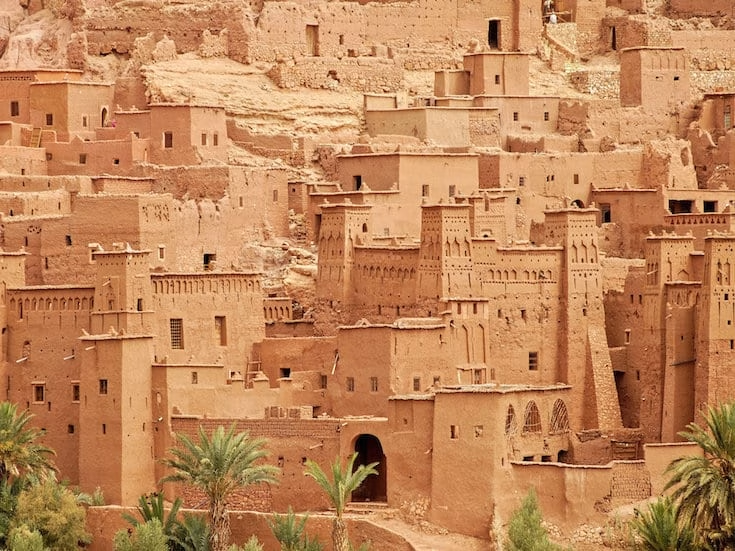
What surprised us was how quickly things shifted once the day began. In the daylight, you see the desert-edge architecture, the hotels and riad-style properties, and the gentle sense that everything here is designed around dunes and excursions. Merzouga doesn’t try to be a city. It’s a launch point, and that’s its identity.
Before the dunes: food, timing, and the “last normal meal” feeling
Before heading into the sand, many travelers grab lunch or tea and prepare mentally for the desert night. This “in-between” time matters more than people expect. If your camp dinner is shared, or if you have dietary needs, it helps to eat well beforehand so you’re not stressed later. Desert camps vary, and what’s “easy” in cities can become complicated in the dunes if communication gets lost.
If you want a smoother, more controlled experience, this is where planning with Morocco Custom Tours can make a huge difference. A customized plan can confirm meals, pacing, and comfort in advance, which makes your whole Morocco Desert Tour feel effortless.
Camel ride into the Sahara: the moment the trip becomes real
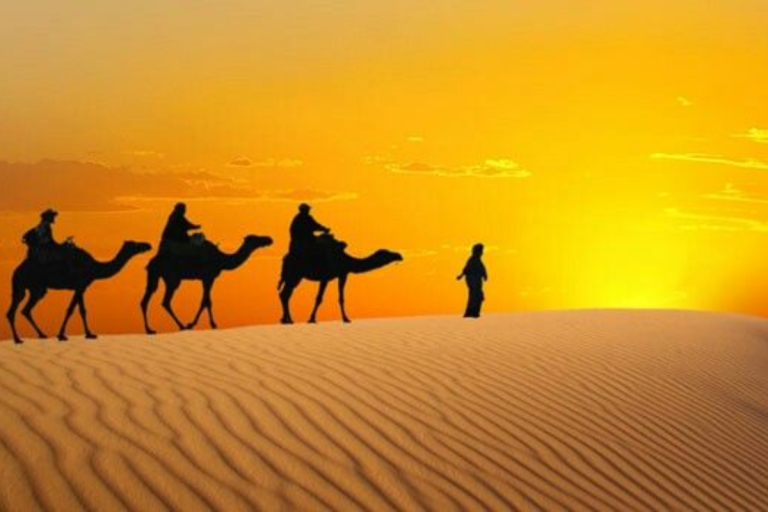
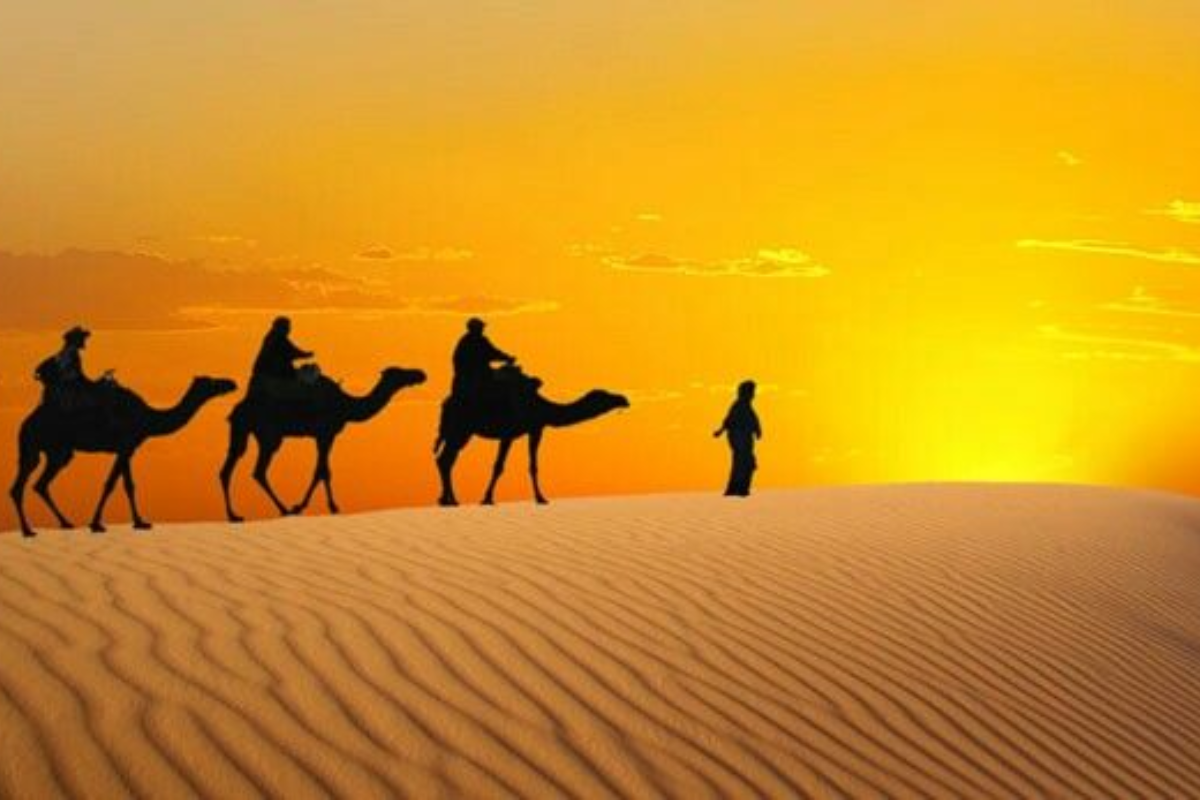
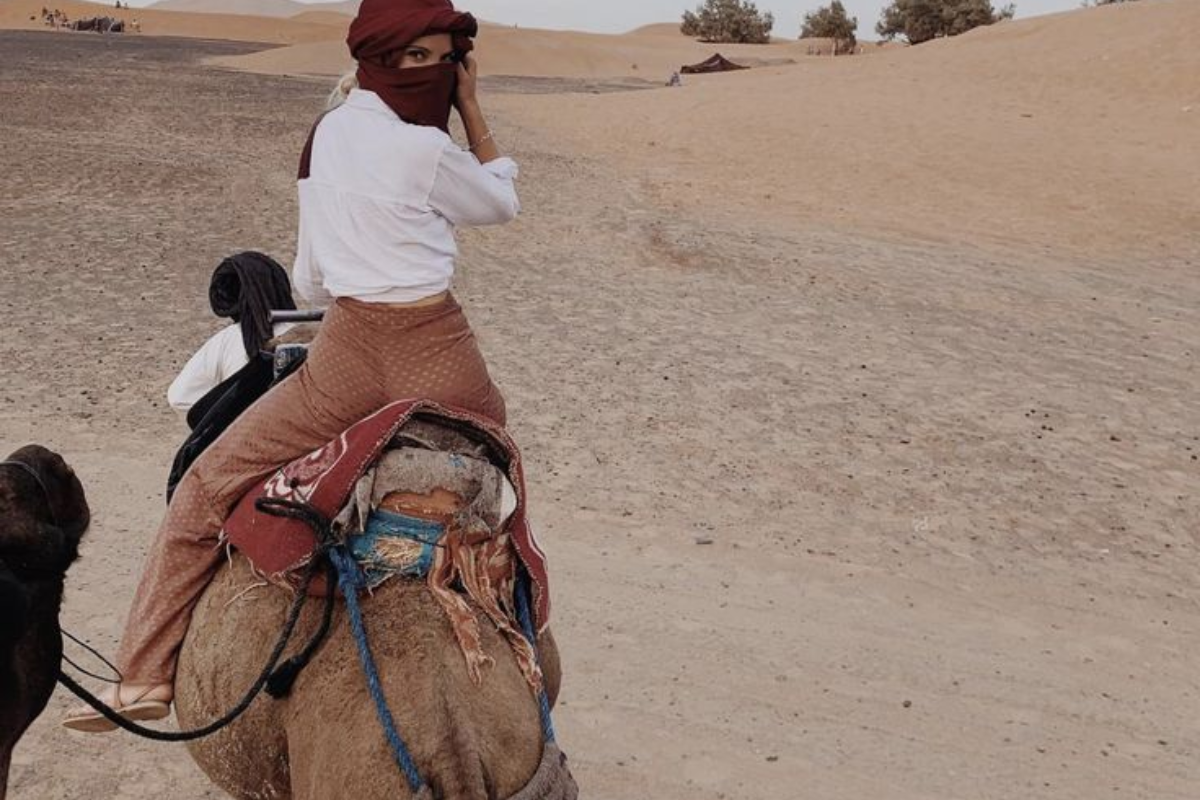
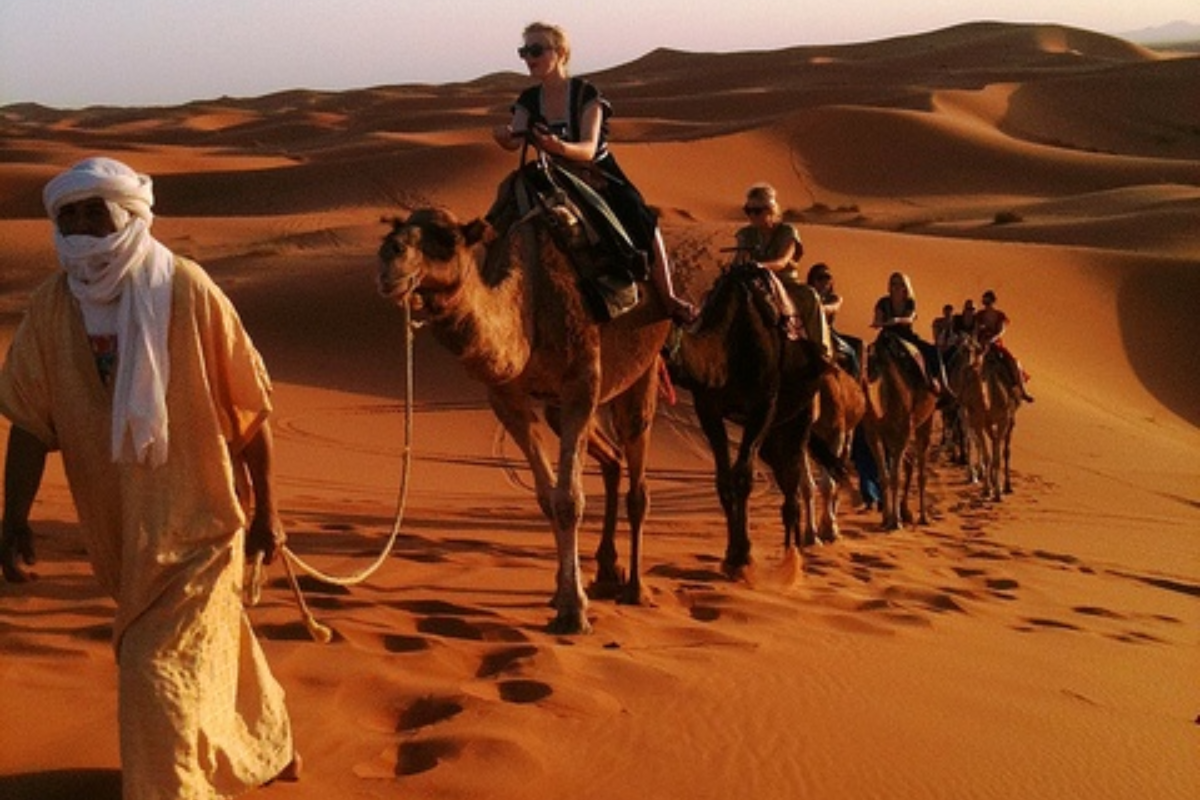
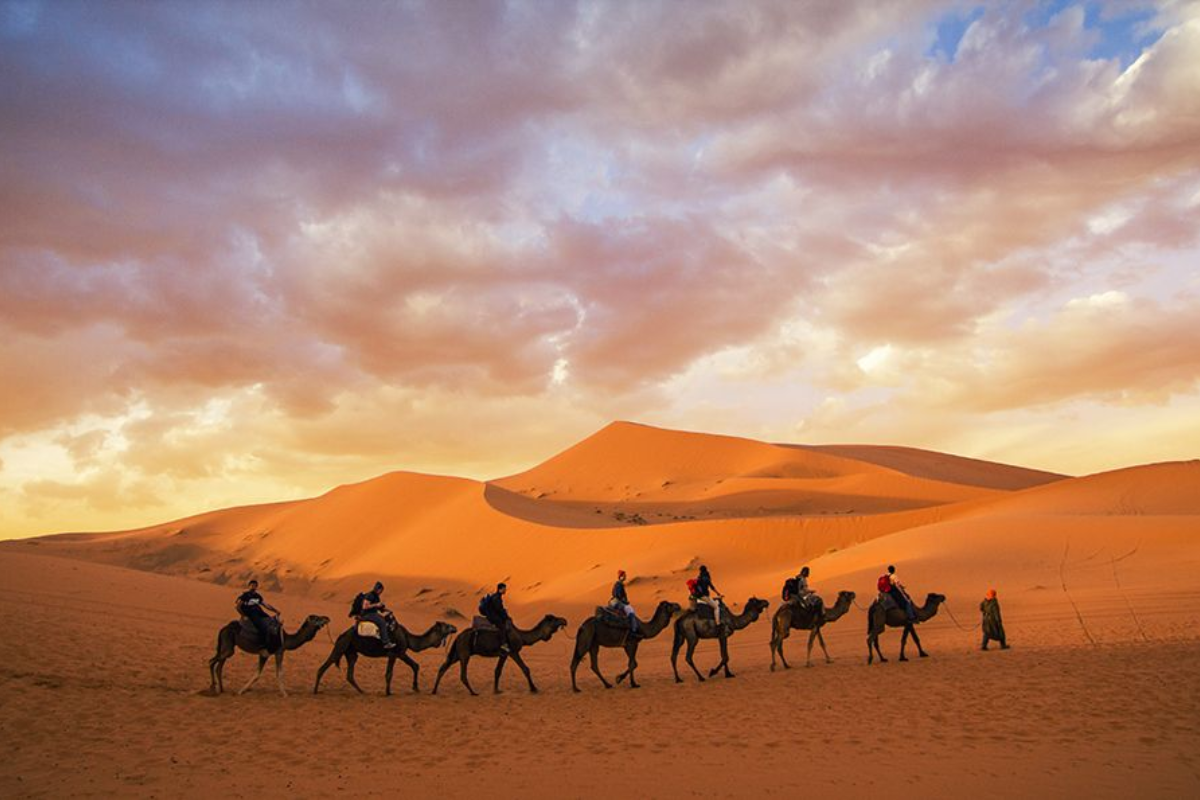
The dunes rise behind Merzouga fast. One moment you’re near hotels and streets, and the next you’re moving into a sand landscape that feels endless. For many travelers, the most iconic way to enter is a Camel Ride in Merzouga, especially timed close to sunset. It’s awkward for a minute, then it becomes strangely calming, because the pace slows everything down.
If you want the deeper, more traditional version of the arrival, camel trekking in Merzouga is what turns the transition into a story rather than a quick shuttle. The camels move steadily through the contours of the dunes, and the silence starts to feel like the main attraction. In other words, the ride is not only transport—it’s the experience itself.
Erg Chebbi: climbing the dunes and watching light change
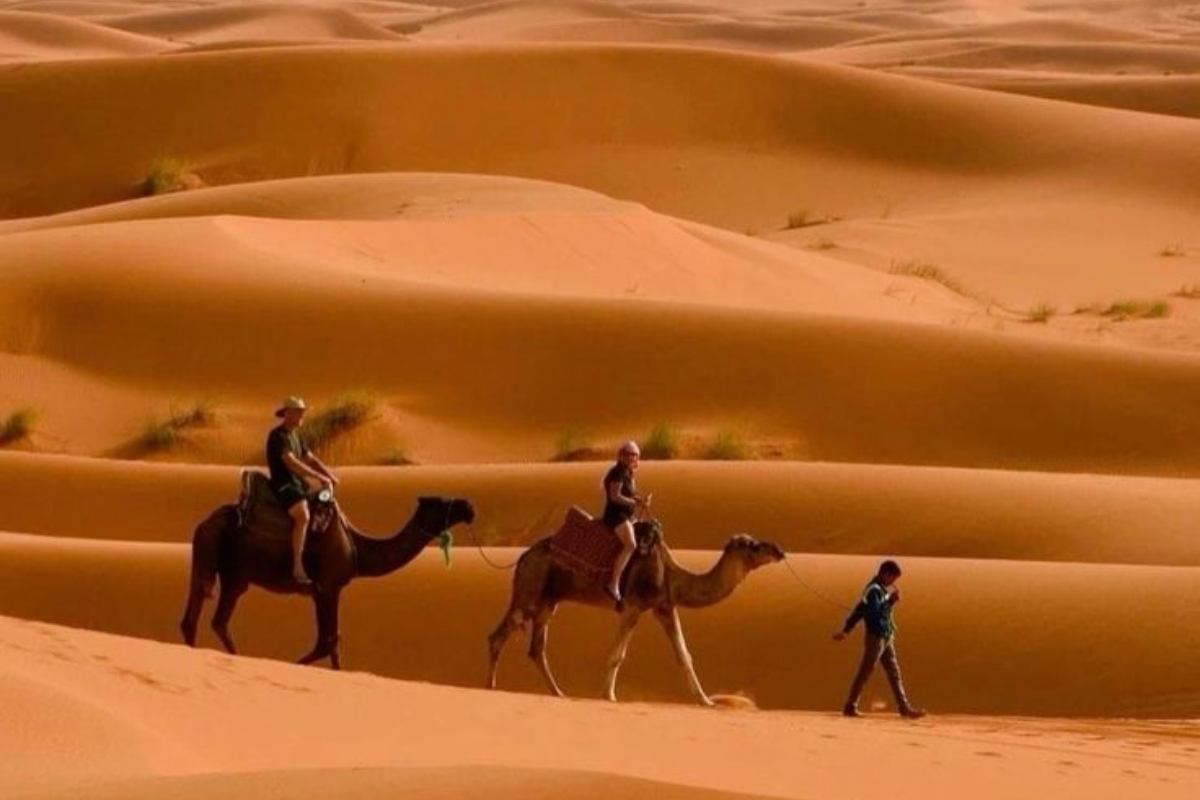
Once you reach the dunes, it’s hard to believe how sharp and sculpted the sand can look. The wind is the real architect here, carving ridges and lines that look almost too precise to be natural. This is why the Dunes of Erg Chebbi become a core memory for travelers. Sunset turns the sand into gradients of gold and orange, and the shadows draw patterns across the landscape that change every few minutes.
This is also where you understand why people build entire routes around Morocco Desert Tours. The dunes are not something you can “quickly see.” They reward time. If you feel rushed, the Sahara becomes a photo stop. If you have space, it becomes a feeling you carry home.
Sandboarding, quads, and choosing your adventure level
Some desert guides bring a sandboard, and sandboarding can turn the dunes into a joyful, chaotic hour of laughter and falling in soft sand. It’s one of the simplest ways to add play to the experience without overcomplicating the itinerary. It also balances the slower rhythm of camel travel with a burst of adrenaline.
For travelers who want a higher-speed option, some routes can include quads Merzouga. Quads can be genuinely fun, but they are a different vibe. If your dream is silence and stargazing, you may not need them. If your dream is action and movement, they can fit well—especially if the rest of your Morocco Desert Trips are built around comfort and rest.
Overnight desert camping: the “glamping surprise” and what to expect
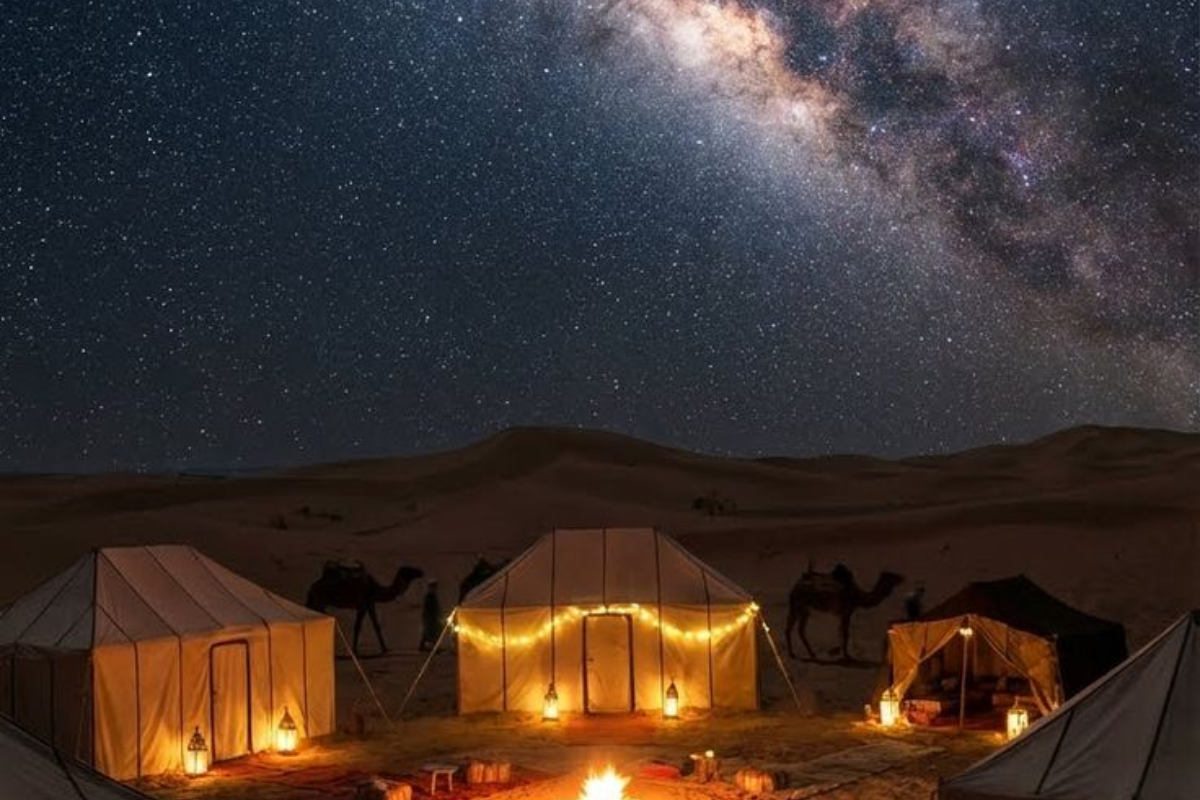
Many first-time travelers are shocked by how comfortable desert camps can be. Instead of tiny plastic tents, you may find proper beds, thick blankets, and a dining tent where meals are served in a communal, welcoming style. Even in winter, the blankets can keep you warm, and the desert night becomes more cozy than harsh if the camp is well run.
Still, it’s smart to manage expectations. Camps often host multiple groups arriving from different routes, which can be social and fun, but also means your meal preferences can get lost if communication isn’t clear. If you have allergies or strict dietary restrictions, this is another moment where private planning through Morocco private tours or tailor-made Custom Tours Morocco can reduce risk and stress.
Campfire music and the night sky: why the Sahara is unforgettable
After dinner, desert camps often gather around a fire for music, stories, and conversation. These moments can feel simple, yet they often become the emotional highlight, because you’re surrounded by silence and sky. The lack of light pollution changes what “stars” even means. You can see constellations clearly, and the Milky Way becomes a real presence rather than an abstract idea.
This is why people talk about the Sahara as “transformative.” It’s not only the dunes. It’s the combination of scale, stillness, and human warmth around a fire. It makes the modern world feel far away, even if you’re only a few days from a major city.
Sunrise: the quiet twin of sunset
Sunrise is worth the early wake-up. The dunes look softer, the light is gentle, and the temperature feels crisp. Colors shift quickly from pastel to gold, and then suddenly the day is bright again. If sunset feels dramatic, sunrise feels intimate, like the desert is letting you see it without performance.
After sunrise, most routes return you toward the edge of the dunes and back to your departure point. You may feel tired, but it’s the “good tired,” the kind that comes from a once-in-a-lifetime experience. That exhaustion is part of what makes the memory feel real.
Choosing the best departure city for your Morocco Desert Tour
Merzouga is the desert gateway, but your trip begins earlier than that—your departure city shapes the entire experience. If you want the classic desert route, many travelers start with Marrakech Tours and then expand into Marrakech Desert Tours. Marrakech is a natural hub because it’s easy to organize departures and connect scenic stops along the way.
If you want a culture-first itinerary, starting with Fes Tours and then choosing Fes Desert Tours can create a route that feels like a story—medina life first, dunes later. If you land internationally and want smoother entry logistics, Casablanca Tours and Morocco Tours From Casablanca can reduce friction and keep your first days calm. If you want a north-to-south unfolding trip, Tangier Tours and Tours from Tangier can be a beautiful way to start from the coast and move into the interior. If your priority is minimizing long road days, starting near Errachidia can be the most practical gateway depending on your route design.
Tours From Marrakech:
2 Days Zagora Desert Tour from Marrakech
3 Days Marrakech to Fes Desert Tour
3 Days Tour from Marrakech to Merzouga Desert
4 Days Marrakech to Fes Desert Tour
4 Days Tour from Marrakech to Merzouga Desert
5 Days Tour from Marrakech to Fes
Morocco Itinerary 6 Days from Marrakech
Morocco Itinerary 7 Days from Marrakech
Morocco 10 Days Tour from Marrakech
Morocco 12 Days Tour from Marrakech
Morocco 14 Days Tour from Marrakech
Tours From Fes:
3 Days Fes to Marrakech Desert Tour
3 Days Tour from Fes to Merzouga Desert
4 Days Tour from Fes to Marrakech
4 Days Tour from Fes to Merzouga
5 Days Tour from Fes to Marrakech
Tours From Casablanca:
Morocco Itinerary 15 Days Tour from Casablanca
Tours From Tangier:
10 Days Morocco Tour from Tangier
15 Days Morocco Tour from Tangier
Tours From Errachidida:
2-Day Desert Tour from Errachidia to Merzouga
3 Days Desert Tour From Errachidia to Fes
3 Days Desert Tour From Errachidia to Marrakech
Final takeaway: make the road part of the story
The Sahara is a dream for a reason. It’s not easy, it’s not close, and it doesn’t behave like a city destination. But when you plan it right, it becomes the centerpiece of your Morocco itinerary. Whether you choose shared travel or upgrade into Morocco private tours, the best advice is simple: accept that the journey is part of the experience, and design your Morocco Desert Tour around timing, comfort, and the moments that matter most—sunset, starlight, and sunrise on the dunes.
If you want the Sahara done smoothly, with pacing that protects your energy and camp choices that match your comfort level, planning with Morocco Desert Friends can turn the experience from “hard work” into “pure memory.” The dunes will still be wild and powerful, but everything around them can feel calm and well supported—exactly how a great desert journey should feel.